
Oil jumps over $4 as China halts fuel exports, US troops head to Middle East
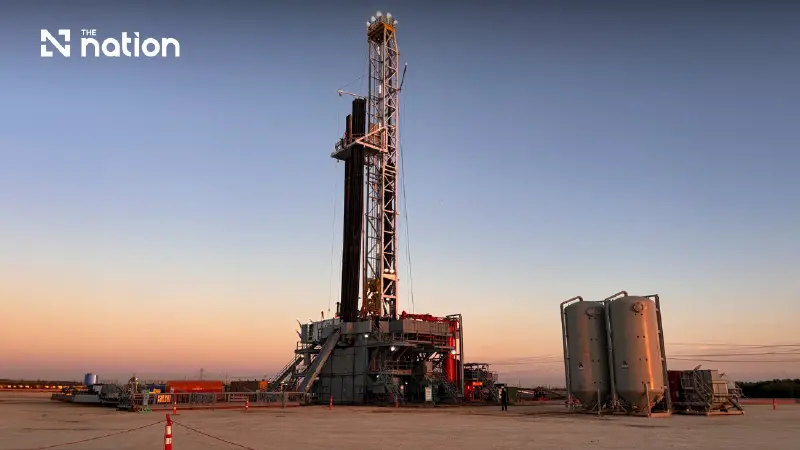


Brent settles above $102 as China's fuel export suspension and reports of a larger US military presence in the Middle East fuel supply concerns
- Oil prices surged, with Brent crude rising over $4 to settle above $102 a barrel, due to concerns over global fuel supplies.
- China suspended exports of refined oil products like diesel and petrol to protect its low domestic inventories, further tightening the global market.
- The U.S. is reportedly sending a third aircraft carrier and up to 10,000 additional troops to the Middle East, increasing geopolitical tensions and fears of supply disruptions.
Oil prices jumped by more than $4 a barrel on Thursday (October 1), with Brent crude settling above $102 as China's suspension of oil-product exports and reports of an expanded US military deployment to the Middle East intensified concerns over global fuel supplies.
The new front-month December Brent crude contract settled at $102.31 a barrel, gaining $4.28, or 4.37%. US West Texas Intermediate (WTI) crude finished at $92.87, up $2.45, or 2.71%.
Prices had fallen about 1% earlier in the session before reversing course as fresh developments in China and the Middle East added to uncertainty over fuel availability.
China suspends fuel exports as domestic stocks draw down
Chinese refiners have suspended exports of oil products beyond Hong Kong and Macau until further notice, four people familiar with the matter told Reuters, raising concerns about further pressure on already constrained global fuel markets.
The restrictions cover products including diesel, petrol and jet fuel. China's domestic fuel inventories remain below pre-war levels, while state-owned PetroChina has cancelled several planned shipments.
Giovanni Staunovo, an analyst at UBS, said the suspension indicated concern over the availability of oil products within China. Whether it would lead to stronger Chinese crude imports after recent declines in crude and fuel stocks remained unclear, he added.
Crude oil continues to reach global markets, but supplies of diesel and other refined products remain tight following damage to refinery infrastructure in the Gulf and Russia.
Russia, a major diesel exporter, has banned exports through October, while President Vladimir Putin has said the country will not resume diesel supplies to international energy markets until sanctions against Moscow are lifted.
Hamad Hussain, senior climate and commodities economist at Capital Economics, said China's restrictions would have less impact than the loss of Russian and Middle Eastern refined-product exports, but would add further pressure at a time of severely constrained supply. His position at Capital Economics is independently confirmed by the consultancy.
US military buildup adds to Middle East uncertainty
The Wall Street Journal reported that the United States was sending a third aircraft-carrier strike group and up to 10,000 additional troops to the Middle East as President Donald Trump considered whether to resume strikes against Iran after the US midterm elections.
Trump told reporters at the White House before leaving on a campaign trip that he was considering his options on Iran.
“Now I have to make a decision. They'll either sign a very fair deal, or they won't exist any longer,” Trump said, according to
Diplomatic efforts to end the Iran conflict have meanwhile remained limited as attacks continue.
Three Liberian-flagged oil tankers were struck by unidentified projectiles while travelling through the Strait of Hormuz on Tuesday, shipping intelligence service Marisks reported on Wednesday.
Sources told Reuters that Iran was preparing for a broader and stronger response if the United States resumed large-scale military attacks, while Tehran continued diplomatic efforts that Iranian officials privately viewed as unlikely to succeed.
Europe considers diesel stockpile release
The European Union's energy taskforce is due to meet on Friday to discuss a possible release of diesel stockpiles, two EU diplomats told Reuters.
The Trump administration has also urged Germany and France to draw down emergency diesel inventories, with sources saying Washington warned that failure to do so could lead to restrictions on US diesel exports.
Continued disruption to global oil and fuel markets has prompted analysts to raise their average forecast for Brent crude in 2026 to $89.05 a barrel, according to a Reuters poll, although signs have emerged that Middle Eastern exports are gradually improving.
Saudi Arabia resumed tanker loadings from Yanbu on Tuesday after restarting operations on its East-West Pipeline.
Goldman Sachs estimated that Gulf oil exports, including so-called “dark exports” involving vessels operating with their location transponders switched off, recovered to 23.3 million barrels a day over the past week, broadly matching their 2025 average. The bank said Gulf exports doubled in September.
