
IMF-World Bank 2026 agenda puts global outlook, AI and Thailand in focus
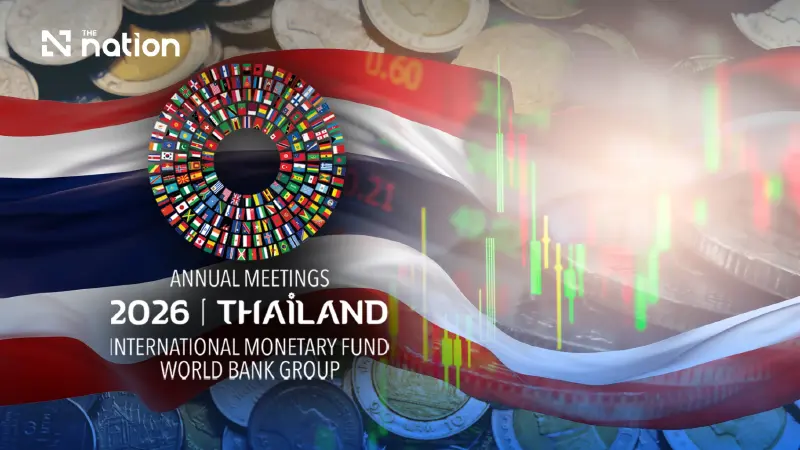


Bangkok hosts the IMF-World Bank Annual Meetings from October 12-18, with global forecasts, AI, green finance and Thailand’s economic priorities in focus.
- Thailand is set to host the 2026 IMF-World Bank Annual Meetings in Bangkok, where it will promote its own economic priorities including resilience, green finance, and a "Bangkok Blueprint" against financial fraud.
- The meetings will feature the release of the IMF's key publications, the World Economic Outlook and the Global Financial Stability Report, which provide crucial updates on global growth and financial risks.
- Artificial intelligence (AI) is a major focus of the agenda, with multiple sessions dedicated to its impact on jobs, the global economy, and associated cyber threats.
Thailand is preparing to host the 2026 Annual Meetings of the International Monetary Fund (IMF) and the World Bank Group from October 12 to 18 at the Queen Sirikit National Convention Center in Bangkok, bringing global economic forecasts, financial stability, artificial intelligence and green investment into focus.
The gathering marks Thailand’s return as host after 35 years, following the 1991 Annual Meetings, and will bring together economic policymakers, central bank governors, financial institutions and business leaders from around the world.
Among the senior international figures taking part are Kristalina Georgieva, Managing Director of the IMF, and Ajay Banga, President of the World Bank Group.
Thailand’s senior representatives include Prime Minister and Interior Minister Anutin Charnvirakul, Deputy Prime Minister and Finance Minister Ekniti Nitithanprapas, and Bank of Thailand Governor Vitai Ratanakorn.
Thailand plans to use its role as host to advance discussions on economic resilience, inclusive growth, green finance and measures to combat financial fraud.
October 12: AI and jobs take centre stage
The week begins on Monday (October 12) with the World Bank Group flagship session “Small AI: More and Better Jobs” from 10am to 11.30am in Room G-22.
The discussion will focus on practical and affordable AI technologies that can be adapted to the needs of developing economies, including ways to improve productivity, strengthen workforce skills and create employment.
Ajay Banga is among the senior figures taking part.
Thailand will also formally open its Thailand Pavilion from 4.30pm to 5.30pm in the G Floor foyer, showcasing the country during the week-long meetings.
October 13: IMF releases global outlook as Thailand pushes resilience
Tuesday will bring two of the IMF’s most closely watched economic publications.
The World Economic Outlook (WEO) will be released from 9am to 9.45am in Room G-03, providing updated projections for global growth and an assessment of key economic risks.
The Global Financial Stability Report (GFSR) will follow from 10.15am to 11am in the same room, examining vulnerabilities in the global financial system and risks facing markets and financial institutions.
From 11.30am to 12.30pm, the World Bank Group will hold “MSME Finance — Leveraging Data for Jobs” in Room G-22, focusing on how better use of data can improve access to finance for micro, small and medium-sized enterprises and support employment.
Thailand will then host “Building Resilience in a Fragmented World” from 1.30pm to 2.30pm in Room G-01, exploring how economies can strengthen their ability to withstand geopolitical and economic disruption.
Another Thai-focused session, “Bangkok 1991-2026: Thailand’s Path to Resilient, Inclusive Growth”, will run from 3pm to 4pm in Room G-17, reviewing the country’s economic development since it last hosted the Annual Meetings.
October 14: Bangkok Blueprint targets financial fraud
On Wednesday, the IMF will release its Fiscal Monitor from 9am to 9.45am in Room G-03, covering public finances, debt and fiscal-policy trends.
Georgieva is then scheduled to hold her main press conference from 10am to 10.45am.
The World Bank Group will hold “Mobilizing Private Capital for Jobs” from 10.30am to noon in Room G-01, examining how private investment can be mobilised to support growth and employment.
A major Thai initiative will follow at 12.30pm with the launch of the Bangkok Blueprint for Fraud-Resilient Financial Services.
The framework is designed to strengthen the ability of financial systems to prevent and respond to fraud through greater cooperation among policymakers, regulators, financial institutions and other stakeholders.
A follow-up session, Bangkok Blueprint Implementation, will be held from 2pm to 3pm in Room G-02, focusing on translating the framework into practical measures to strengthen digital financial security and consumer confidence.
October 15: Asia outlook and global economic debate
On Thursday, the IMF will hold its Asia-Pacific regional economic press briefing from 9am to 9.45am in Room G-03.
The briefing is expected to examine the region’s growth prospects and major risks facing Asia-Pacific economies.
Later in the day, the Debate on the Global Economy: Forging Resilient and Dynamic Economies for the Future will run from 3.30pm to 4.30pm in Room G-01.
The day will conclude with a Thai Cultural Show from 5.45pm to 7.15pm on the LG floor, highlighting Thailand’s cultural identity for international delegates.
October 16: IMF, Fed and AI in spotlight
Friday will begin with the Annual Meetings Plenary from 9am to 10.15am at the Plenary Hall on the first floor.
Speakers include Ajay Banga, Kristalina Georgieva and Carlos Carvallo Spalding, President of the Central Bank of Paraguay and Chairman of the 2026 Annual Meetings.
From 10.30am to 11am, Georgieva will hold a fireside chat with Kevin Warsh, Chairman of the US Federal Reserve, in Room G-02.
The discussion will be followed by “AI and the Global Economy: Transformation in the Age of Disruption” from 11.15am to 12.15pm in Room G-01, exploring how artificial intelligence is reshaping economies, labour markets and business.
Thailand will host another major policy session, “Financing a Resilient Green Economy”, from 3pm to 4pm in Room G-13.
The session will examine how financial resources can support the transition towards greener and more climate-resilient economies, with Georgieva and Banga among the scheduled participants.
The day will close with “AI & Cyber Risks” from 4.15pm to 5.15pm in Room G-01, focusing on emerging cyber threats associated with artificial intelligence and their implications for economic and financial systems.
October 17-18: IMFC conclusions and 2029 handover
On Saturday (October 17), the International Monetary and Financial Committee (IMFC) will hold its press briefing from 12.30pm to 1pm in Room G-03, providing an important indication of the policy conclusions emerging from the week’s discussions.
A Thai-language Bangkok Dialogue press conference is scheduled from 2.30pm to 3.30pm.
The meetings conclude on Sunday (October 18) with the 2029 Annual Meetings Signing Ceremony from 9am to 9.30am in Room G-03, with Georgieva and Banga scheduled to attend.
Thailand seeks a larger role in global policy debate
The 2026 Annual Meetings will give Thailand an opportunity not only to host major global financial institutions but also to place its own economic priorities on the international agenda.
The government and Bank of Thailand are seeking to highlight policies on economic resilience and inclusive growth while promoting discussion on green financing, technological change and greater protection against increasingly sophisticated financial fraud.
For global markets, attention will centre on the IMF’s latest assessments of growth, financial stability and fiscal risks, as well as debate over how AI is transforming employment and the wider economy.
For Thailand, the week offers a platform to demonstrate how its economic priorities have evolved since Bangkok last hosted the meetings in 1991 and to position the country as an active participant in shaping responses to emerging global challenges.
